Showing posts with label review. Show all posts

Friday, 16 September 2016

[review] Fallen Frontiers


So while I may have been obsessed with playing Kingdom Death recently, I got through from Scale 75 my pledge reward for Fallen Frontiers. Fallen Frontiers is a scifi game, with some of the typical tropes you would expect. It's a time of interstellar turmoil, as Humanity is led by megacorps into war with a alien race, not unlike our own, but more brutish, alien created super humans clad in power armour, and a race of strange cybernetic horrors.


Fallen Frontiers stands out a bit as the models are true scale, meaning no stupidly sized body parts, and are made to 35mm scale, make them stand a good head above GW figures, and makes them equivalent in size to Kingdom Death. Overall I am more than impressed with the designs and sculpts. The models are not too busy, and so there is room to paint the surfaces with a sense of shading and lighting, rather than just edge highlights. The models being resin are very crisp, and light, and they don't feel too brittle. Also there is a noticeable difference in height between the humans, and the superhumans and the aliens.


In the core box that everyone else will be buying, you get 10 Ares soldiers, a Ares command model, a Ares heavy weapon model, and two heroes. The Riff get 10 troopers, 5 assault troopers, a commander for each type of troop, a heavy weapons model, and two heroes. Add in some dice, counters, some terrain, and the rules, and for 75 Euro that is not a bad deal. Especially as that is two 300 pt armies. A typical sized army is meant to be 600 pts.

So the rules.


The game has 5 turns, each turn has 4 phases. The winner of the initiative roll for the turn gets to choose the order in who takes a phase. Each player gets to have 2 phases of activation of units in a turn. Units activated can either move, shoot, or charge. Moving and shooting is for particular weapons an troops. But, moving imparts a bonus defence against shooting. So already there is some sort of tactical element to the order in which you move and shoot and making your opponent do the same.

Where things get interesting is Fatigue. It can happen that a player can take more than 2 phases in a row, where that string of phases straddles two turns. When this happens, based upon the stamina of a unit, units have to pass a test to be activated. So again, there is a tactical risk is either taking a series of phases in a row, or forcing your opponent to do the same! A failed fatigue roll means the unit fails to activate. The Ares only take tests on the 4th phase in a row, Riff on the 3rd, Sayx typically on the 3rd, and the Harvesters never test and pass automatically.

A phase starts with cleaning up and doing stuff that has to be done at the start of a phase, followed by the chance to play a tactics card, followed by drawing a new card. Cards play a big role in the game. Each side has a deck of 20+ cards that are tactics, or things that can be used on a unit when it activates, or played as reactions to events and activations. The cards have a cost, in Logistic points. These points are generated at the end of each turn by the hero models. Some cards also require Krithium which is generated by capturing extraction points. So there is a element of deck building in the game to design a deck that best suits the army and play style.

It is also worth noting that hero models do not have profiles like troops, instead gaining the profile of the unit they are attached to, and lending specific benefits to that unit or the army.

In a phase, once tactics cards are played, units are activated. Each unit as stated previously can move, or shoot, or charge into combat.

Movement for troops is 6 inches, unless there is some sort of terrain, or special rule in play. Charging into combat lends a further 50% onto movement (so lets just say 9 inches... so long as it means they can get into base to base contact).

Movement confers a -1 modifier when being shot at. Short range when shooting confers a +1 to hit. Cover confers a +1 modifier to armour saves.

Units have a few stats. There is Training Factor (TF) which is how hard they are to shoot at. Armour is the bonus to the die roll to save against a hit. Weapon Strength is the value that must be equalled or exceeded on a armour save against a wound. Then there is Weapon Range, the max range of a ranged weapon. All weapons have a short range of 12 inches. Then there is the Close Combat Attack Factor, and Close Combat Defence Factor. These two values are used in combat.

Shoot is really simple. Check ranges on weapons in the unit, roll that many dice for each type in range, apply movement modifiers and perhaps other modifiers due to skills, and then see if you have equalled or beaten the TF value of the target. At short range you can target specific models in a unit and thus allocate hits accordingly. To save against hits, roll for each hit a die, add the Armour value, and if it equals or beast the Weapon Strength, then you survive.

Units that loose 50% of their current strength the unit must pass a die roll by scoring equal or less than their TF value. If they fail they are pinned, and the unit card is flipped, which results in their stat lines and abilities changing. Pinned units must pass a TF roll to activate and to be no longer pinned. If a unit that is pinned is pinned again due to another failed TF roll, the unit is removed from the game. Loosing a leader model also called for  pinning test using the TF value. The benefit of heroes is that they confer to their unit their own TF value for these tests.

Combat requires each side rolling a die, adding the number of models in the unit, and adding either their CCDF or CCAF value. The attacking side uses the CCAF value. The defenders their CCDF value. Is the attackers had charged that phase, they get a +1 bonus. If the attackers exceed the value of the defenders, they score that many hits. If the defenders have the higher value then no wounds are applied. Weapon Strength is used again for these attacks. Armour rolls are made as normal. But, the defending unit gets to hit back - this is simultaneous and so is done before removing models due to wounds. The defenders in that phase now use their CCAF, and the attackers use their CCDF. If the enemy unit eliminated then the other unit gets 3 inch move, and if all models make at least 1 inch movement they count as moving for shooting purposes. If no unit is eliminated, the unit that suffered the most wounds has to pass a pinning test.

An important aspect of the game is Krithium. This resource is gained by capturing extraction points. At the end of a phase each hero generates a number of logistics points, equal to their logistics value. Also for each Krithium extraction point captured, a Krithium point is generated, and also a victory point. A extraction point is captured by a unit if it is within 3 inches of it, and no enemy is in range. The extraction point remains captured even when the unit leaves. But if the unit sits on it, an extra Krithium point is generated at the end of the phase. These Krithium points are used to activate abilities, cards from the main deck, or also used to buy cards from the armoury, which is a separate deck you build for your army.

In total a game lasts for 5 phases, and the winner is the side that survives with the most victory points.

Other interesting aspects are that heroes have multiple wounds, and again, once they take enough wounds, their card is flipped and their abilities and stats change. Vehicles also have some specific rules, essentially equivalent to having wounds.

Overall the game has a tactical element with the turn sequence, meaningful choices of which unit to assign each hero in the army, coupled with the cards. The game clearly favours an aggressive play style, and each faction in the game has a definite style that distinguishes them from the others.

The first wave of releases is the core box (which has a number of model poses replicated) and the faction boxes (which have more variety in line with what we got in the Kickstarter rewards), plus a few heroes, terrain, and accessories and paints. The next wave I hope will be models for all factions, and then I hope next year will see some new additions to the game. Right now the Riff and Sayx have been the most fun to paint, but overall I can see myself picking up everything for small forces ore larger ones. The Harvesters look like great fun to paint.



Wednesday, 26 August 2015

[review] Skorne Empire

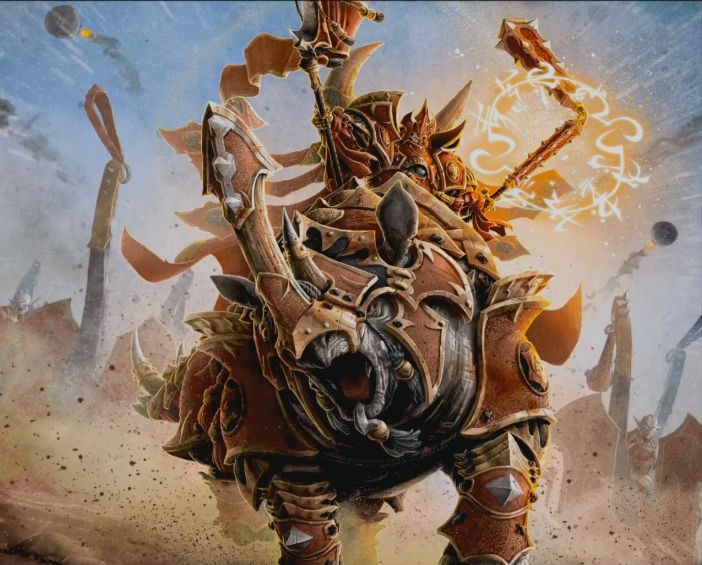
So if you have ever caught Mike and myself ever talking about the Iron Kingdoms, and Warmachine and Hordes, you will get the hint that we are massive fans of the Skorne. There is something out them that is somewhat unique, or at least, refreshing when compared to traditional, Tolkien, fantasy races.

What do we know about the Skorne already?


This strange race of humanoids comes from the far east of Immorean, past the Storm Lands and deserts, and past the Abyss. They are an ancient race, with an equally age old enmity with the Elves. They are a warrior race, with a society that focuses on slavery, torment, pain and torture. Their design and look is clearly inspired by aspects of Japanese Samurai culture, and ancient Persia. And as for their physical form, they are pale, with bony rigged foreheads, and pointed ears.

On face value alone they could be considered the equivalent of Dark Elves from that other wargaming company, but then you would be wrong.

The Skorne Empire book really lifts the lid off this ancient empire. We learn of their rise from a nomadic culture around the time the ancient Elven empire was destroyed, and their warring between city states, and the eventual formation of a unified empire, first under the exiled king, Vinter Raelthorne of Cygnar, and then under the Supreme Archdomina Makeda.


The Skorne, unlike all other races in the Iron Kingdoms, have no religion that focuses on a creator god. That is not to say that a god did not create them, but that the Skorne neither know, nor care, if this is the case. Death does not lead to the after life, and instead Skorne souls are left to be consume by the Void. However, the Skorne culture survives despite these metaphysical hindrances. They are a race that is focused inwardly on self ascension and exaltation. Pain, torment, war and suffering are all things that allow Skorne to grow and become stronger and more powerful. They are also a culture that is focused on ancestor worship, especially having learnt how to save those important Skorne souls from the Void, trapping essences in gems, which in turn can speak, teach, an even animate stone statues.

On reading the Skorne book you can be forgiven if you think that playing a game where you are all Skorne is one about being evil slavers, foul torturers, and nothing more than Saw the rpg. But a game playing as the Skorne is more about a certain point of view. For them, life a fleeting thing, that also contains much power, and which must be dominated in order to obtain a form of immortality. The Skorne do not conduct torture or inflict pain for fun, or for pleasure. These are all tools, as part of their philosophy, for controlling the world. For the Skorne willingly inflict pain and torture upon themselves in order to become stronger. For the Skorne are all capable of magic (they all have a ARC stat!), and thus can all learn Morthitheurgy - a form of magic powered by blood, flesh and pain. In many aspects the Skorne a mix of Eastern philosophies. They a have a warriors code, they have a understanding that life is short and they must create things of meaning for the after life offers no redemption, they worship their ancestors, and they practice magic that focuses on the flow of life essence and relies on asceticism.

They are simply evil, from a human perspective. In some respects that's a bit like playing a Vampire the Masquerade chronicle......


Of course the book provides ample information on their empire in the east and how to run various campaigns for different mixes of characters. Of course the Skorne make excellent enemies in existing games (hint hint - the Witchfire Trilogy).

The real show stoppers are the slew of new careers, such as Beast Handlers, Extollers, Bloodrunner, Cataphract, Chirurgeon, Chymist (Skorne have their own Alchemy!), and more.

And of course there are all the Skorne warbeasts, and more from the eastern deserts. We also get a nice look at the upcoming gargantuan beast for Hordes, the Desert Hydra.

Overall this is an excellent book, filled with content and art to the level we expect from Privateer Press.

Wednesday, 19 August 2015

[review] Bad Moon Rising - An Iron Kingdoms RPG adventure

Bad Moon Rising is the latest pre-written adventure for Iron Kingdoms RPG from Privateer Press.
The adventure, like many of those produced by Privateer Press, consist of a number of scenes, mixing social and combat encounters. And while many think IKRPG is a combat heavy game, Bad Moon Rising has a lot of roleplaying chances as the player characters get to interact with many NPCs.
Bad Moon Rising takes the form of a horror murder mystery. So expect some spoilers coming up and if you are players in a campaign, perhaps totally stop reading this review now.
The adventure centres around the attacks in a Khadoran outpost by the Circle of Orboros, and in particular the increasing number of vicious attacks by a monster - a Warpwolf. Over a number of nights, the convergence of the 3 moons of Caen progresses, and the ferocity of the Warpwolf attacks increase. The Circle mount more and more attacks from outside of the fort, and all the while a harsh snow storm blows.
The characters are of course suspects, and are expected to take it upon themselves to investigate the attacks, to determine the nature of the creature and put a stop to them. As the story continues it will become apparent that there is a dark history to the fort that relates to the current events. Furthermore, a conspiracy will make itself known and lead to a final, bloody combat.
As a murder mystery and investigative story, the main third of the adventure is fairly non-linear, with many small side scenes and chances for the players to learn more about the events surrounding the scenario. So while on the face of it the story may seem a bit of a rail road, there are plenty of optional scenes and potential plot shortcuts or even derailments, that would lead the story toward roughly the same conclusion.
As a story, it is overall fairly obvious, more so, because it mirrors the adventure I ran for my first game way back when IKRPG was first released. A warpwolf attacking, a mystery surrounding the targets of the attacks, the warpwolf being in fact someone important within the settlement being attacked. This means that with a little work, and the adventure does have suggestions, the location and many of the details of the adventure, can be altered to fit the needs of your own campaign.
Finally, as a adventure for IKRPG, it is a nice window into the creatures and people that feature in IKRPG: Unleashed, perhaps presenting the opportunity to even include characters from that book too.

Friday, 24 April 2015

[review] Let loose the Argus' of War - Iron Kingdoms Unleashed Review


Delicious, tasty, filling, meaty, something to dig your teeth into, but also a familiar flavour throughout.

Oh yeah, we’re talking about the new IKRPG Unleashed book. Not some meaty dish!

So previously I have reviewed the IKRPG Unleashed Abridged rulebook that comes in the new starter adventures kit. That basically covered what we are familiar with - primarily the core rules, and magic for Willweavers. But, we also got a taste of the new things. Harnessers, Warbeasts, and Blood Magic.

The main core book builds on that familiarity. It assumes that the reader is essentially new to the world of Caern and the Iron Kingdoms, or of course is a Hordes player. Thus we get the entire history of the setting all over again, but with certain events and characters and myths explored in more depth that they were in the IKRPG core book. These of course bring life in the wilderness into focus over life in the cities. Also, where IKRPG assumes the in game date is 605 AR as Llael has fallen to Khador, Unleashed assumes the in game date is 608 AR, and thus assumes that the events surrounding the war in the Thornwood between Cryx, Khador and Cygnar and others, have passed.

While IKRPG explored the nuances between the different ethnic groups that make up the Iron Kingdoms, Unleashed looks at the each of the main wilderness factions (Orboros, Trollkin Kriels, Farrow, Gatormen), plus the various other human tribes, and explores where their territories lie, what life is like in these societies, and their relationships with the other factions of Western Immoren. The amount of detail is excellent, and really allows you to delve into just one of these groups and use that as a basis for an adventuring party.

What is really excellent is that we get a healthy dollop of information about the Nyss, and their life that borders the wilds and the cities, and so builds upon the little information we had in the IKRPG core book.

Let’s not forget we have information on the Tharn and their tribes. They are presented then as a separate group, while also being allies to the Orboros. Perhaps not to a similar level of detail, we also get information on the Bog Trogs, who again are allies to the Gatormen, but are their own race.

What is important with all these sections, is that we are presented these groups so that while we get a sense of their communities and lives, but also these groups are not presented as monolithic entities. We get a sense of how diverse even Gatormen societies can be depending on the bayous they hail from.

Following the section on the different societies we get a section that explains the differences between different geographical regions, the way of life in those places, the hazards that they present, and the animals and plants that exist there. Each major forest, desert, mountain region etc are detail individually. This is all important for a GM who then has a reference text to help them paint an evocative picture of the landscapes that the adventuring party is travelling through.

With the setting out of the way, we get the familiar again. Character creation and stats. We have a number of races to choose in this book. Bog Trogs, Farrow (whose Warbeasts I learnt are just malformed Farrow births!), Gatormen (I really need to play one!), Humans Nyss, Pygmy Trolls, Tharn, and Trollkin. We have 4 archetypes are normal, but for the wilds, Intelligence is replaced by Cunning. Of course we then have the list and details on careers. Of course how these are used in character creation is the same as for IKRPG, but the options is quite interesting. Highlights are the Bokor, the Bone Grinder, the Bloodweaver (basically a close combat Gun Mage), a variety of mounted careers. Ugh… guess I will be getting some mounted troops for my armies!

The familiar continues, as we wade through abilities and skills, and the combat rules. Of course there are new entries that are more befitting the wilderness based games. Perhaps something that has a lot more options is the section on environmental hazards. 

Magic. That most mysterious of arts. Is again… familiar. Character can be will weavers (just as in IKRPG) or harnessers, who are able to control beasts and channel fury, and thus be Warlocks. Much like Gun Mages, Blood Mages can be willweavers or harnessers, depending on career combinations.

Harnessers, as I explained in the previous review, are exactly what you expect. They use rules identical to how warlocks work in Hordes, and are able to rile beasts, force them, and channel fury from them.


Wolds, the construct monsters of the Orboros get their own section in the chapter on magic. We get details on their construction of Wolds, the golems made of wood and carved stones. While these creatures do generate Fury and so act as warbeasts, they differ in that they must be repaired rather than healed, and do not frenzy. This makes Wolds in the rpg rather like a cross between a warbeast and a warjack.

That all of course brings us to the next major chapter, Warbeasts.

Essentially as we already know from the abridged rulebook, that the rules for them are the same as they are in Hordes. Of course we do get some more information on the nature of the warbeast/warlock relationship, the dangers of an ill fed beast, the way such creatures frenzy when their warlock dies, and more. For every beast within the book, we get information on the rules for training, arming, and animi, that beasts can learn and be equipped with. The actual stats for the beasts are given later in the book, and so this saves space by separating the Warbeast specific rules from the Warbeast stats.

The chapter on gear is as expected, featuring the tools of the trade for many of these races. But we also get a whole load of items and ingredients for wilderness alchemy, which are great additions for even regular IKRPG alchemist characters. But Bone Grinders (who are not just farrow, but any race) are more like specialist cooks, who know the brews and broths to create. Bone Grinders can also fabricate magical fetishes from the body parts they harvest from creatures and fallen foes.


The penultimate chapter, preceding the GM section, is the bestiary, which serves both as a list of opponents for characters, and the selection of creatures for warlocks to control. Many of these will be familiar both from the wargame, or from the pages of No Quarter and the Monsternomicon. Creatures get the standard style of information we have become used to, plus the templates (given in the appendix and in No Quarter and the Monsternomicon) than allow us to present variations on the same creature (so a juvenile Argus, or a Argus Alpha, or a trained Argus etc). There are some new beasts in the pages here, like the different types of Drakes, and the Feral Geist.

So, how do I feel about this book?

If you are new to Iron Kingdoms, and start here rather than the IKRPG book, then it is an excellent, massive, and well presented book, filled with the art and lore that we have come to expect from Privateer Press.

However, if you are like me, and already play the war games, or play the IKRPG, then there is a lot that is familiar, or duplicated wholesale. Is that a bad thing? Perhaps. But then Privateer Press has two core books for two player bases for two different settings, which are bound together by a greater setting. In that respect, it is similar to the scenario FFG has with the Warhammer 40k rpgs. So if you really want the content of Unleashed, but don’t want to buy a book you already have half of, then go get the pdf is my suggestion.

Lastly, right at the back of the book are two pages of conversions done by the Privateer Press studio. Lots of cool ideas here and I hope PP will make models available in some manner to make getting bits easier for such things.

Oh and the hard copy version of this book is excellent. I guess with the IKRPG core book, I now have two core books for my group when basic rules need referencing. But then the abridged rulebook is great for that too.

Friday, 27 March 2015

[review] Unleash the Beast - Iron Kingdoms Unleashed Abridged Rulebook

Biting, Snapping, Tearing, Growling!


So out to download are the pdfs for the books contained within the new Iron Kingdoms: Unleashed starter kit. That kit contains the abridged rulebook, miniatures, and tiles and counters to represent the battlefield in the adventure you can play through.
The books within that box are the abridged rulebook, character sheets for the pre-generated characters, and the adventure.
In this post I'm going to briefly review the abridged rulebook.
If you already play IKRPG you will get a good kick out of this!
Seriously. The abridged rulebook serves two great functions than just being a primer to the rpg. It's 32 pages long and just has rules within it. You get all the standard rpg rules as seen in IKRPG core book, plus the rules and spells for the magic users of the wild. So it's a cut down rulebook. Great to dish out to players for either flavour of IKRPG. And, it is a nice add on to IKRPG if you are not ready to get the full Unleashed book.
So other than all the standard rules, what is new?
Well we get the rules needed for the pre-generated characters of the adventure box. We get rules for the third magic user path. Harnessers. So these are our Warlocks. The rules are as expected, ported straight over from Hordes. We get a bit a bit of info (though no specifics in this book) on how Warlocks have paths, which tie them to certain types of beasts. Obviously life is hard for Warlocks without a beast, because then you have no source of Fury. So starting characters that are warlocks are more than likely to have at least one or two easy to manage beasts. On top of that there is a bit on what happens when a warlock dies, or goes unconscious. The link to their beast is broken, and it goes wild - which could mean a lot of different things.
While mentioned, we get no specific rules to cover Bone Grinder, other than their spell list. Bone Grinders are a form of alchemist of the wilds, that make totems and magical items from animal parts. Fun! Very eager to seem them in action. Plus, not all Bone Grinders are Farrow (the only type seen in Hordes so far).
Totally new and cool are Blood Mages. Think Gun Mages, but that use magic via their close combat weapons. Really nasty spell list (oh you die and explode blood, have an AOE attack on the enemies nearby).
So in total, this book in pinch, combined with the beastiary for IKRPG, Monsternomicon and NQ articles, really quickly gives you the ability to drop in Warlocks into your games of IKRPG. Of course, the main Unleashed book will have all the background info, rules, and monsters (lets be fair - glorified weapons and warjacks) for warlocks to use.
Am I excited to get the big book? Oh hell yeah. Do I want the actual boxed set? I am seriously thinking about it. Do I want to play a Gatorman? Oh yes please!

Monday, 26 January 2015

First Impressions - Batman the Miniatures Game


So tonight was the first game of the Batman Miniatures Game, by Knight Models.

Not much to explain. Miniatures of the 28mm variety, representing characters and fighters from the Arkham series of games, and of course the Chris Nolan Batman films.

For our game, we used the Joker gang vs GCPD.

Jokers:

Harley Quinn
Ringmaster with Axe
Clown with Pipe
Clown with Shield
Clown with Baseball Bat

GCPD:

Commissioner Gordon
SWAT officer with Shotgun
SWAT officer with automatic rifle
Police officer with nightstick 

The scenery used copious amounts of Terraclips, made by World Works Games and Wyrd miniatures (now unfortunately out of print). What you see here are two sets of Buildings of Malifaux, one of Streets of Malifaux, and bits from Vaults of Ruin, and Dungeon Essentials.


Welcome to Old Town and the old Goatham church.

In the background, the old Falcone restaurant has seen better days.


Gordon checks all the angles.


The Clowns are grabbing the loot, but not before Gordon and the GCPD lay down a hail of gun fire. 


A bat in the hand is worth two in the belfry.

So how does the game run?

The game uses alternating activation, with the person with the least amount of models getting to pass a number of times. Models get a number of Willpower points, that are distributed to action types, which in turn are then spent to move, attack, dodge and block, or perform special actions.

Line of Sight assumes rather long ranges, but relies on models being near light sources.

Now combat, once you have played through it, is rather simple. Roll to hit means rolling above a target Defence value on a D6. Defence requires a roll above the Attack value on a D6. Wounding requires a roll of a D6 to be over the Strength of the attack (more on that later). Damage comes in types, stun and wounds, and doing enough to equal or beat the endurance of the enemy model leads to a KO.

Now what do I have to critique here with the base system, and the, what will be old soon, rulebook. First, models in combat have a Strength value, the lower a better, so that they may wound opponents in combat. But for shooting..... oh for shooting, you will not find the roll to wound in the most likely place in the book. No, you need a 2+ to wound, and we only discovered this when reading about armour types.

The rulebook is hopefully going to be improved with the new edition coming out soon, and I also hope it streamlines some of the rules. The need to roll to hit, roll to block, roll to wound..... yeah.... I got tired of all that back with Warhammer and 40k. I much prefer having to roll less frequently.

Now in fairness the types of wounds at least gives a level of granularity that combined with the Willpower points, means that you have some resource management, much like Warmachine and Hordes. And of course that is no bad thing in a game with very few models and an alternating action sequence.

So hopefully the next game will go faster, and see more use of the terrain. I can see us delving into the sewers and ruins of Old Gotham and Wonder City.


Edit:

A comment on scale. Some people have said, "They are 35mm minis". Well I call bullshit on that.

First off, which figure is the basis for that height. Batman, or Average Joe Thug? Also is that 35mm to the top of the head, or 35mm to the eyes?

For comparison here are Harley Quinn, next to a Warmachine figure (32mm apparently), and a Confrontation figure (28mm from the wiki).


Can you see the issue? Also, note how the Batman figures happily work with the Terraclips terrain, terrain as advertised as working with "25mm to 32mm".

So just what scale is the Batman minis game?

A scale that means it will work fine with most wargaming terrain out on the market for 25mm to 35mm.

That is my answer.

Also on the topics of rules, this site gives a far better overview of the game that the pdf rulebook does https://minimusingofabear.wordpress.com/2014/01/09/soapy-bearbox-batman-the-miniature-game/

Sunday, 28 September 2014

Iron Kingdoms RPG Review - No Quarter 53-56 and The Monsternomicon

Privateer Press have been very active recently, churning out either books, new models, new plastic versions of old models, and of course great content in their magazine, No Quarter.

In the pages of No Quarter there have been a number articles for the Iron Kingdoms RPG. There have been adventures, new careers for characters, new equipment, locations and conversion guides for models.

Over the last 4 issues of the magazine, there have been a number of adventure modules, that collectively form a longer campaign.

It all starts back in No Quarter 44, back when IKRPG first was released and they presented the quick adventure, Spirit in Steel. The adventure there and the new module, rely on the antagonist, Vladislav Abrosim, a rogue Grey Lord on a quest for his own immortality. In the original adventure Abrosim was already testing concepts and ideas from the dark book of mechankia, the Librum Mekanecrus, and had placed the soul of a man into the body of a steamjack.

Part 1 of the "Immortality" campaign, "Undeath Metal", takes place near a small Khadoran town. People have been going missing, and Abrosim's lackeys have taken to continuing the experiments, this time utilizing the technology of the Convergence of Cyriss (let's not kid around, Cyriss tech is just a cleaner, less evil variant, of certain necromantic arcane technologies). This adventure is a pretty standard series of encounters with the aim of stopping the bad guys and saving people (you know... the family business).

Part 2, "Act of Murder", picks up the trail of the Abrosim lackey, and takes the troupe to a Khadoran city, Gorogrey, on the the boarder to Ord. Where the last adventure was simpler, and featured some Cyriss based enemies, this adventure is more complex. It's a murder mystery. The adventure has some great locations and set pieces, such as the theatre and the rail depot, and this adventure ties up the plot from part 1.

Part 3, "Mercilessly Alive", follows up on Abrosim's research, either following on from "Act of Murder", or drawn by strange disappearances and apparent slow death of the town of Erofeev, just on the boarder to Ord. Here the investigation concerns the work of a rogue alchemist, and the results of their terrible experiments. While previous adventures have had a sense of either the undead or necromancy to them, much of this adventure, and the following part, "Many Deaths, One life", rely on a sense of body horror. Again in this adventure there are plenty of good set pieces, and give a great feeling of how the Iron Kingdoms are populated by these small towns.


What is important to take home from all these adventures is that they present many non-combative solutions to particular sections, and in fact, finding these routes is often given a greater reward both in terms of plot and experience points. Also it is important to note, where possible, even for these adventures presented in the magazine, we get brand new art. Privateer Press is putting in a lot of work to support the RPG, and to give examples of different story types (something we will pick up on with the adventure they released recently, "Bitter Medicine").


The Monsternomicon was perhaps two books that really sold how different and diverse the Iron Kingdoms is, especially back when the RPG was designed to use the D20 system. What we have here is the long awaited return of the books, with the new rules system. In the issues of No Quarter, the free bestiary download, Full Metal Fridays, and Urban Adventures, we already got a good selection of monsters and creatures, and some of those make a return here. That isn't a bad thing, since it is easier to have it all in one book, rather across many different downloads. But we do get a lot of good new stuff.

Critical to the new book is the idea of creature templates. These are essentially ways in which the based creature stats and skills etc. can be modified to represent variants on the monster. So a juvenile creature, or one that has magic abilities etc etc.

Highlights in the book have been the Croak Hunters (I just painted one for my Gatorman army), the Dracodile (will this be the Minion gargantuan beast!), a infernal beast, and of course Dragon Spawn!


Now is it a book to buy? Maybe not as a hard copy. You will be only using one or maybe two creatures from this book at a time in any one adventure. After all, IKRPG is not a dungeon crawl! Of course you may think "Where are the Farrow? Gators? What about some Everblight Dragon Spawn!" Well we do have Unleashed coming up, don't we, where we can play IKRPG in the wilds of Immoren, and play as plenty of those creatures.


Sunday, 30 June 2013

Gaming App Fun

   So recently I have been painting furiously as I wanted to get my Warmachine battle groups ready for some gaming. I already have the Cygnar battle group, and now with the two boxed set of Warmachine, I have a Khador and Menoth battle group. I am also almost done painting the contents of the box. Just have the Exemplar Cinerators to paint. Man am I done with painting white!
   The next purchases for my armies are on their way, a new heavy warjack for my Cygnar, a new war caster for them too - Allistair Caine, and Alexia and her unit of Risen skeletons. Because who doesn't like the option of semi good guy undead in your army! Next up after them will be gun mages and Black 13th Gun Mage Strike Team. Yeah gun mage army. So I should soon have 25 point armies. Which then gives me a number of variations, and also the choice of a 30 point Cygnar army (I'm trying to build themed armies). So then I can start of Hordes (I want the two player boxed game, and then to focus on getting 25 point armies for Troll Bloods, for which I already have a battle group). Of course this means I have quite a few models for use in the Iron Kingdoms RPG (like undead, trolls, ogrun etc).
   So staying on topic I recently got my rpg group into playing Warmachine. So I spent the best part of the evening teaching them how to play the game. And it was a great opportunity, what with all the smartphones and tablets, to use the Privateer Press app, War Room. War Room is a digital way in which to create and store army lists for the game. Furthermore it allows for the referencing of the entire rules for the minis, and also through the game track damage of your men and warjacks. If you spend some money you can get the full army cards for each force (you buy individual sets, or whole sets for Hordes and Warmachine - and if you buy one you get access to all the wargame rules!). The app also allows for the linking of accounts, so that players can check the health of the opponents units on their own device, rather than having to ask their opponent.
   Overall the app is quite great, and a really good example of how gaming apps should be. Great art, good UI, and also useful. I really hope to see this type of thing expanded to included the Iron Kingdoms rpg.

   Next up on the gaming app list is the new Magic the Gathering: Duel of the Planeswalkers 2014. Now I haven't collected Magic cards in something like 15 years. It became too much about who had the biggest wallet. So I have generally stayed away from ccgs. But this app (Playstation, Steam, Xbox, Android, iOS) has got me back into Magic. It gives me all the fun and challenge of the game without having to do more than buy the game. Now of course you do have micro transactions to unlock stuff faster, but meh, I will stick with the challenge. Playing can either take the form of challenges, designed to teach you how to think in Magic, campaign mode, were you play against theme opponents and Planeswalkers in order to unlock new decks and cards, or you can play against the computer or online, using either the decks or sealed draft. It's a great game and really give me back what I wanted from Magic.

Monday, 10 June 2013

[review] Werewolf the Apocalypse 20th Anniversary


Werewolf the Apocalypse 20th Anniversary Edition - Review


This is a hard review to write. Hard, because it may come as me being overly critical of the product. But the thing that is important to point out, is that I am approaching this product as someone that never played Werewolf the Apocalypse (WtA). When I got into World of Darkness games in 1996, I of course was a bit of a proto-goth. I was into vampire films, listening to Marilyn Manson and Atari Teenage Riot. So of course I was running Vampire the Masquerade for the first time. I also eventually picked up Mage the Ascension, and of course some of the most influential films at the time for me would be Fight Club, The Matrix, and Blade. So a lot of things would classify me more towards the goth/cyber goth side of things, rather than metalhead. And in some ways, this is perhaps why at the time WtA didn’t appeal to me. It seemed all a bit too gung-ho and rather superficial.


So given the above and the fact I have never played WtA, yet I know plenty about the setting due to where Mage and Vampire crossed over with it, I am approaching this review blind.


Let’s start with the easy bit. Layout and art. Generally the book is excellent looking, but I feel that there is not a unified look to the book. I understand that much of the artwork is from the original books, or is new work by the same artists, and that in itself is a good thing as it means the product taps into the nostalgia of the fans of the game. But, as a new reader, I find the mixing up of full colour art, greyscale, and black and white line art, a bit jarring. Now some of the art work I do like, especially some of the more rough, dreamy pieces. I have to admit to not being a Ron Spencer fan. Sorry guys. But it's just all guts and guns, and rather flat and boring. But then I am a big Christopher Shy fan so you can make your mind up on that front.


So onto the text. There is a lot. This is a big book. All the tribes are there. Even the extinct ones - yes even White Howlers. Plus every Changing Breed is in there. I have also been told on good authority that every gift, rite and fetish is in the book, plus with a few mechanical changes to reflect adjustments in the rules (so Athletics and Dodge skills now are one thing), and of course changes to accommodate how our world has changed (so gifts that influence technology).


Speaking of changes, of course the setting has taken into account events around the world that have occurred since WtA was in print. We have a brief insight into the Gulf of Mexico oil spill, fracking, the tsunami and nuclear power plant explosion in Japan, the more recent wars and conflicts in the Middle East, and of course the continuing degradation of the environment. All of these events have been looked at through the lens of WtA, and have been used to highlight the ongoing war of the Garou against the Wyrm and the Weaver.


So how would I sum up this book? I can easily see that this product has everything anyone would want for a WtA game. It would be difficult to exhaust all the content within. There are plenty of antagonists and examples. But then I feel I should also give my opinion as someone who has fresh eyes on the product. I think that while the Changing Breeds are an interesting addition in the book, I think they could have waited to have been released in a different book. I found their addition diluted the core theme of the game - the horror of being a werewolf that walks two worlds. To me they add an unnecessary distraction to new readers. I also have to admit that some of the Changing Breeds come across as a bit silly. Furthermore I have mixed feelings about the Tribes. Some of the tribes I like, since they represent a theme. A core concept, that you feel more free to manipulate and play with in order to fit the setting for your own game. Which is why I find the tribes based on ethnic groups less useful, and perhaps feel a little shallow and have a sense of cultural appropriation. Finally the scope of the game is a bit weird. There is a big, global scale theme to the game - that you and your pack will be fighting the manifestation of the Wyrm and Weaver, as they stretch out over the globe. The premise is that all the Garou who will fight in the final battles are already born. But, by knowing that, the core game makes personal horror, which I think really grabs the attention of players, pointless. It makes more mundane concerns, such as the safety of family, friends, your workplace, seem rather inconsequential. Which comes across strange, since the game is about the real world and the spiritual reflection, and so surely even the small battles on your doorstep should be made to feel important.


But as I have said, if you are an old fan I am sure this book won’t disappoint. Maybe this is all just me being rather post-millennial and all that shit.

Thursday, 6 June 2013

Darker Days Radio video review - Iron Kingdoms RPG

So I'm getting more and more advanced with the video editing, and things just begin to look more professional all the time. So here is the new video. Enjoy


Thursday, 23 May 2013

[Review] Terraclips Scenery - Buildings of Malifaux

Terraclips Scenery - Buildings of Malifaux - Review


So as you can tell from my recent posts that I have been running the Iron Kingdoms RPG by Privateer Press. And so far that game has been a blast. The first session I ran without miniatures. But for the second session we used them. And guess what. Combat is damned quick with minis. It's a lot easier and fortunately, the IKRPG rules are fast and furious - no surprise given the wargames Hordes and Warmachine are also fast paced games.

Now for some time I have also been aware of the Malifaux game, and the scenery for it. And I had spotted some of the sets in the FLGS. Well I took the plunge and got a set. The Buildings of Malifaux.

The Terraclips system, which this is set is from, consists of the Buildings of Malifaux, Streets of Malifaux, Sewers of Malifaux, and 3 more sets not for Malifaux but market for more general rpgs and wargames. The buildings are popped out from A3 card that is of a good thick stock. The images on the cards are excellent and the card is varnished in a matt varnish, that gives a good tactile feel. Doors are popped out and can stand on their own, and there are also ladders and steps to put together. All pieces are double sided, meaning you can represent different floor and roof types, and walls are decorated to represent the inside and outside of a building. There are different wall lengths, floor sizes (3 inch square, 6 inch square), and various other pieces to create complete buildings that have complex interlocking of roofs. There are also pieces for walkways/balconies.

The floors themselves also have a subtle grid system marked upon them, and this means that it should not really influence how you use these buildings in games where premeasuring is not allowed. The walls are tall enough for a 32 mm figure to stand inside.

The buidlings use a system of clips - bought separately. You get flat pieces (I), corner pieces (L) and t shaped pieces (T). So with these you can clip the walls and  floors together. The result - with clever use of the clips - is a sturdy building. Different stories of a building are not clipped together. But the clips do have grooves that mean that they sit on top of walls and so prevent a story sliding away. Everything easily unclips again. It is impossible to use everything in the box though since the extra pieces are so you can change the layout and accommodate it properly. The makers really have thought well about this set.

With one set of scenery, and one set of clips, a good amount of buildings can be made. I would say you can put together 6 buildings of different sizes. Maybe more. Compared to other card based scenery, it is far easier to put together than the stuff that came with the Mordheim boxed game, and more sturdy than the Necromunda card scenery from 16 years back. Or you can easily make one big building. I would highly recommend these sets for those of you that want good rpg scenery, or for wargames, that flat packs. It's not cheap mind you. £60 for a set and the clips. But then the clips you can use as you see fit. I would eventually like to have 2 sets of the buildings and 1 of the Streets of Malifaux set, as then I think I would have the perfect set to represent the streets of the city of Corvis in Iron Kingdoms.